
When the way we observe changes, the relationship changes: the experience of the ICDP with professionals and families in Ipojuca
A mother observes her three-year-old daughter playing alone. Before, when faced with behavior that she considered inappropriate, her reaction could be immediate: speak harsherly, correct, scold. Now, something happens between the child’s behavior and her own response. She stops. Observes. Tries to understand.
“I have this rigid side …and my daughter is calm and quiet. When I want to talk tough and I see her playing alone, that’s where I take time, and now I communicate in a softer way, she has her way of communicating, I see that now.” Participant in Camela’s group, Ipojuca
This small change helps to tell the story of the implementation of the International Child Development Programme (ICDP) in Ipojuca, Pernambuco. An experience that began with the training of professionals and reached the daily lives of mothers and caregivers, proposing something apparently simple, but fundamental: looking at the child as a person — someone who feels, desires, expresses and communicates with the adults who take care of him.
It is in this daily encounter between adults and children that the ICDP seeks to produce change.
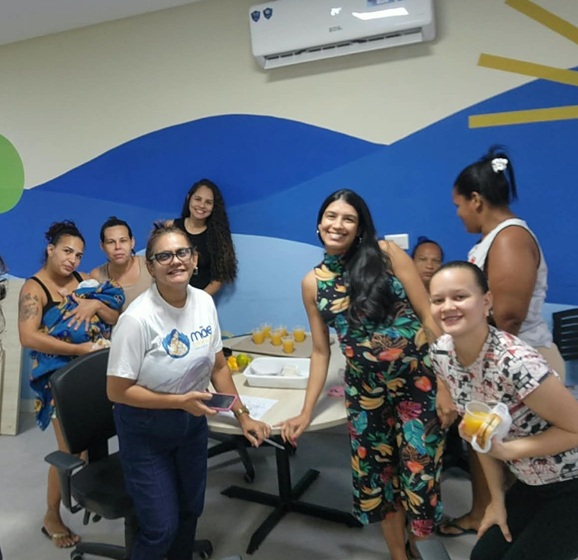
The project was born with the proposal to support the implementation of the ICDP methodology I am a person with the Mãe Coruja do Ipojuca Program, strengthening municipal actions aimed at early childhood. To this end, it articulated training of professionals, implementation of the methodology with families, updating of the material for multipliers and actions aimed at expanding the experience.
Between August 6 and 14, 2026, 20 professionals from the areas of Health, Education, Social Assistance, and the Mãe Coruja Program of Ipojuca participated in the training in the ICDP methodology. They were teachers, pedagogical coordinators, psychologists, nurses, social workers, and other professionals who, from different public services, are part of the lives of children and their families.
The proposal was to prepare them to apply the methodology with families served at health centers, schools, social assistance services and by the Mãe Coruja Program. Training was at the center of the strategy designed for Ipojuca: to qualify professionals to understand and experience the ICDP and, later, to conduct the methodology with families of children up to six years old.